
I first conducted a competitive scan to understand the existing landscape of savings products in South Africa, and whether any of them had already solved the problem Graduate Support was trying to address.
In addition to every major bank offering an individual savings account, the following banks also offer group savings accounts that operate like stokvels, which made them the most relevant products to examine closely.
Standard Bank: Society Schemes Savings Account
FNB: Stokvel Savings Account
Marketed to a general audience saving for different reasons such as family events, trips with friends or workplace savings clubs for example. This is a broad audience with various reasons for saving. Of the three, this is the product that students could theoretically repurpose for the post-graduation gap, the flexibility is there. But having to repurpose is precisely the problem. A product that doesn't explicitly acknowledge the post-graduation gap offers no structure around and no guidance toward it. A student would have to arrive at FNB already knowing they need to save for this specific moment, already understanding the costs involved, and already motivated enough to use a general savings product around a need the bank has never named. This is the kind of friction that means the gap goes unserved even when the tools technically exist.
Nedbank: Stokvel Account
Positioned for traditional savings clubs and stokvels. Again, the problem is that the assumed user is someone with an established community, a long-term goal and the stability to pursue it.
The gap isn't in the products themselves, it's in who they were built for. The opportunity for Graduate Support isn't to invent a new financial mechanism, the savings account already exists and the stokvel already exists, it's to direct a familiar tool at a moment the market does not yet explicitly acknowledge.
That reframing is where Graduate Support's real differentiation lives. Not in features that competitors lack, but in an intention that competitors don't consider. A savings account built specifically for the post-graduation gap, that students begin contributing to before they graduate (individually or with peers) gives a familiar product a clarity of purpose that the existing landscape misses.
Marketed towards savings clubs, burial societies and investment groups. The assumed user is someone with an established community, a long-term goal, and the stability to pursue it.
Drawing on the Youth Capital research and the broader picture of graduate unemployment in South Africa, I then constructed a representative persona, to keep in mind as I work on the project.
Who They Are
Sihle Masondo is 22 years old and a recent university graduate. They have no income, no employment history, and no financial support to fall back on during the job search period.
What's Working Against Them
Job searching is costly. Transport to interviews, data to apply online, and printing documents all require money Sihle doesn't have. Without an employment history, they also can't access short-term credit to cover the costs associated with job searching.
What They Want
They don't want money to be the reason why they can't search for a job. Without any financial support to draw from, the costs of job searching become the difference between being an active job seeker and being forced to stop. Sihle needs a financial reserve that exists specifically for this need. They need to prepare for it while studying because that is when a student loan, a part-time job, or a bursary stipend still provides some form of income, however small. That window closes the moment they graduate. The goal is to use it before it does.
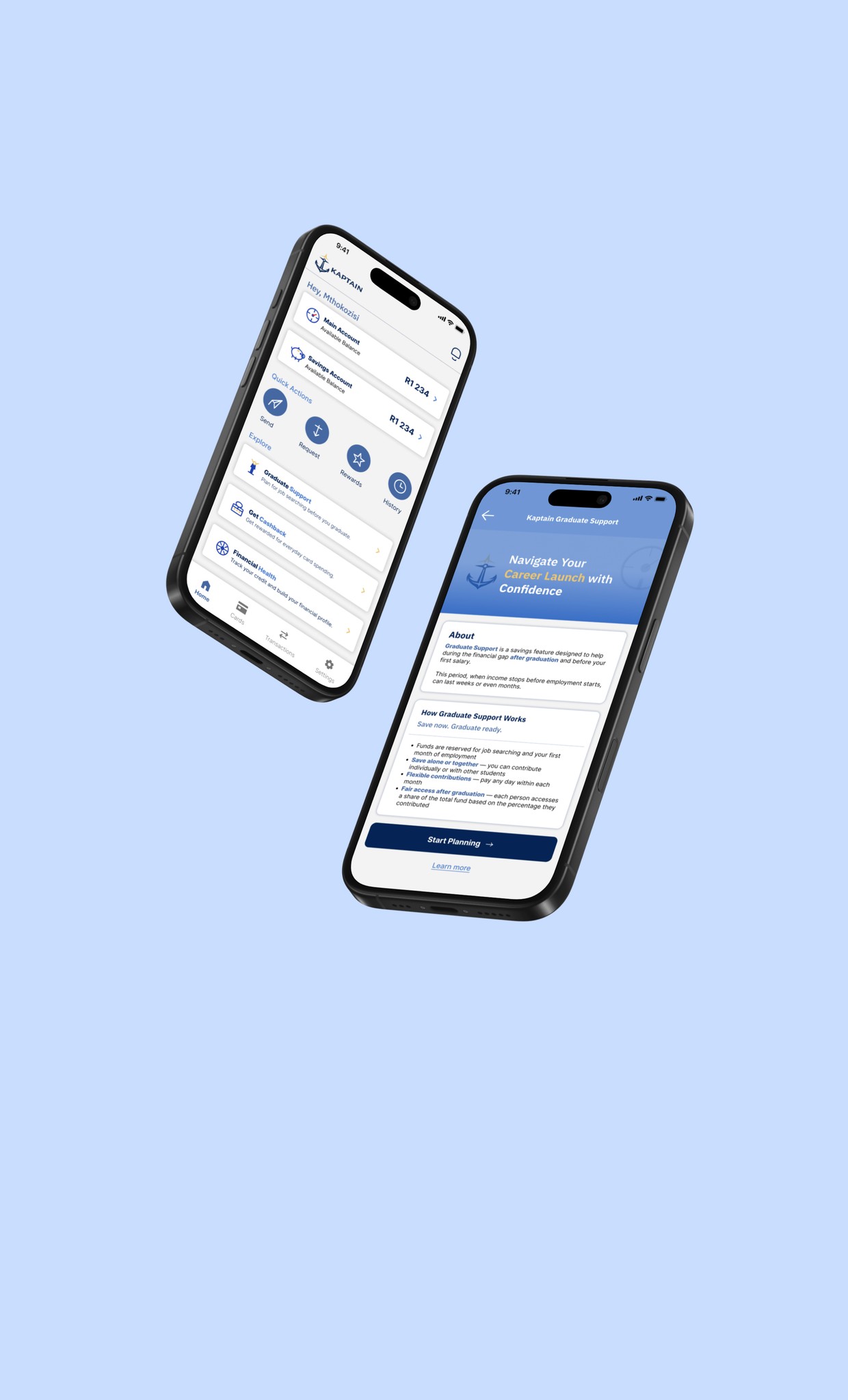
Home Page
The entry point. This is where a student encounters Graduate Support within their existing banking app. The feature has to earn attention in a context where the user isn't necessarily looking for it. The design challenge here is discoverability: making Graduate Support visible to someone who didn't know they needed it yet.
Information Page
Before any commitment is made, the user needs to understand what Graduate Support is and what it's for. This screen does the reframing work. It's where the product's intention is communicated clearly enough that users recognise themselves in it.
Personalisation Page
This is where the user makes the product their own. They set their savings goal, define their timeline, and decide whether they're saving individually or inviting peers to save alongside them.
Dashboard Page
Once set up, the user needs a place to track their progress, manage contributions, and stay motivated through what could be a long saving period.
After validating the flow, I explored initial ideas through low-fidelity paper sketches before moving into digital design.
Home Page
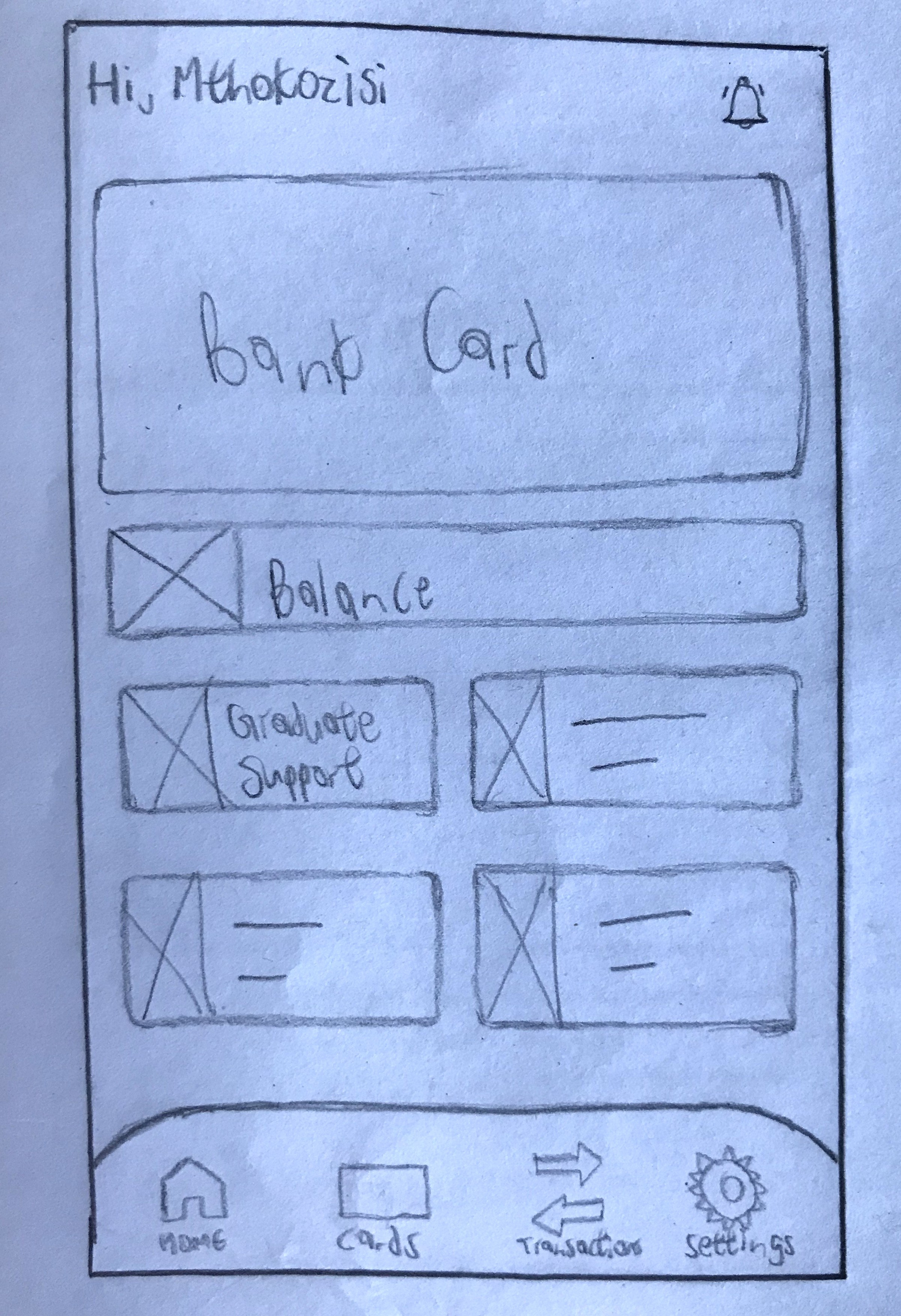
I placed the Graduate Support feature on the Home Page to enable passive discovery through a familiar home screen layout, reducing the barrier to engagement.
In the final design, I created a dedicated Explore section where the feature sits contextually rather than floating beneath the balance. I removed the prominent card, as it distracted from other banking features, and increased the width of the components so there was room for descriptions beneath each feature name, giving users a scannable hook to spark curiosity and encourage clicks.
Information Page
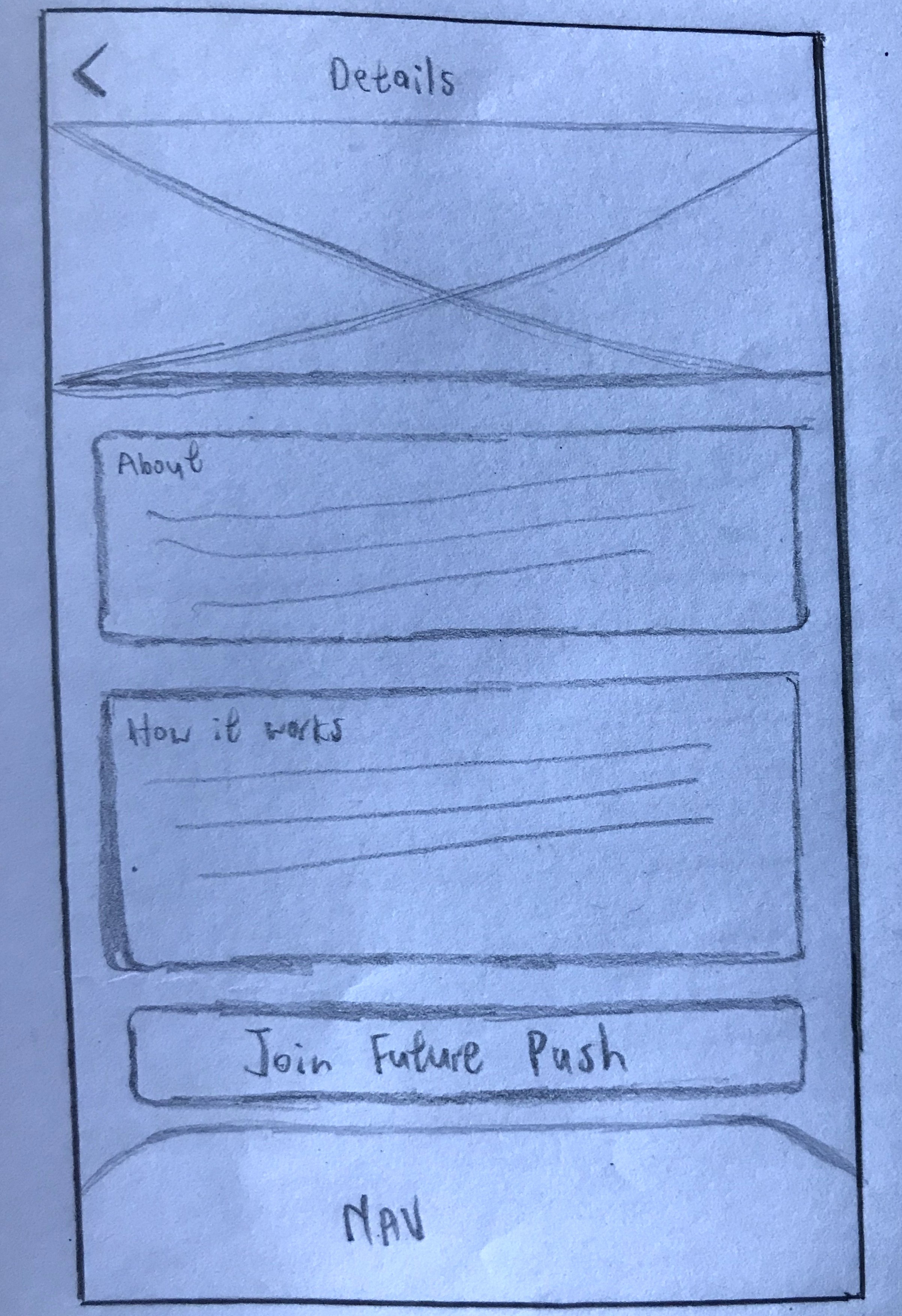
I included an "About" section to give users an overview of the feature, and a "How It Works" section to provide further details.
In the final design, I added a "Learn More" link beneath the CTA for users who still needed clarification after reading through the content.
Personalisation Page
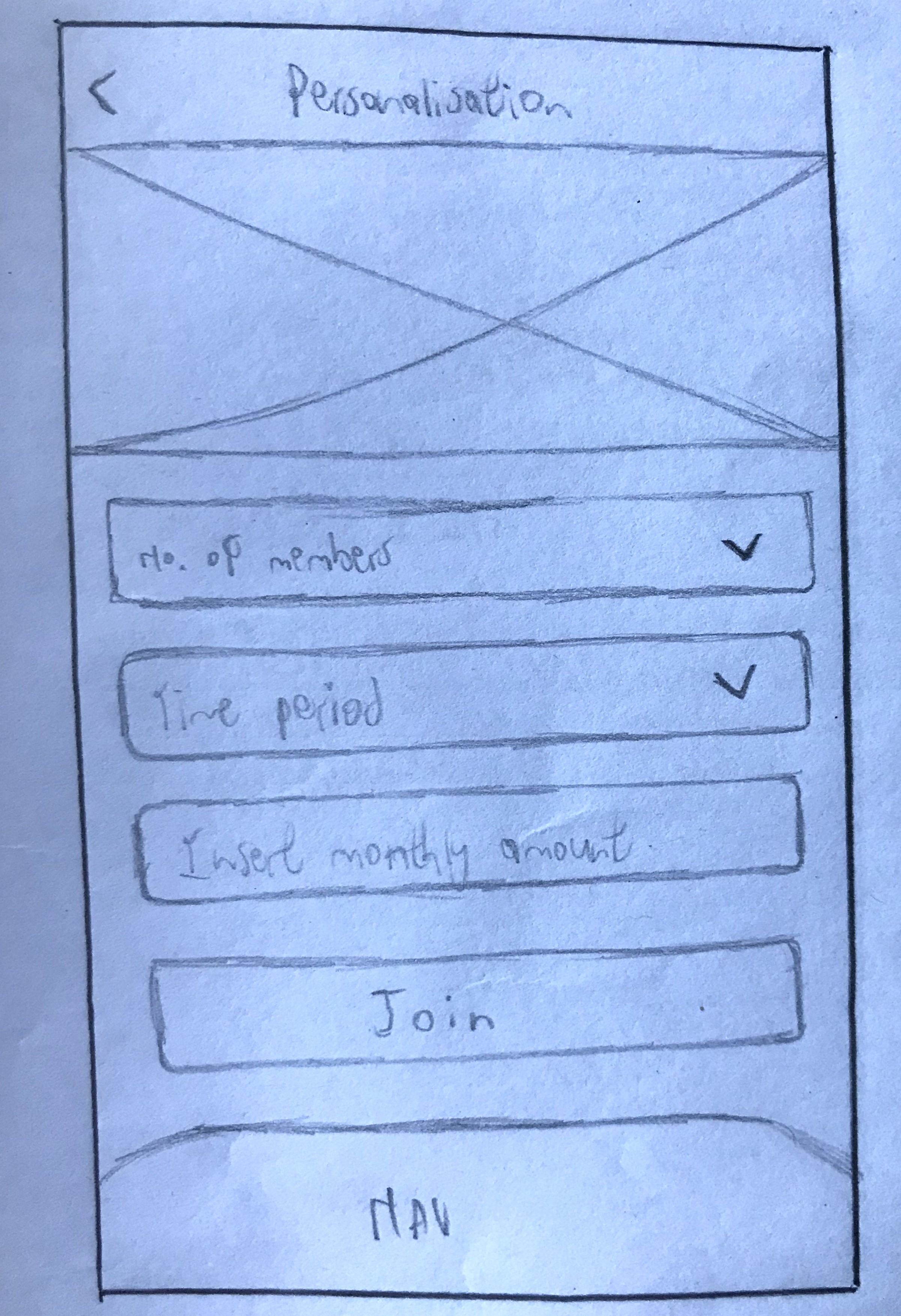
I used dropdowns to let users select the number of members, the time period, and their monthly contribution amount.
In the final design, I replaced the amount dropdown with a slider ranging from R100 to R2,000 in increments of R100, as a dropdown would have been too long. I renamed the field to "Select an Initial Amount" to imply that the amount can be changed over time. The "No. of Members" dropdown was replaced with two clickable options that include descriptions, along with helper text explaining how additional members can be added. A "Learn More About These Options" link was added beneath the CTA for users who needed more information.
Dashboard Page
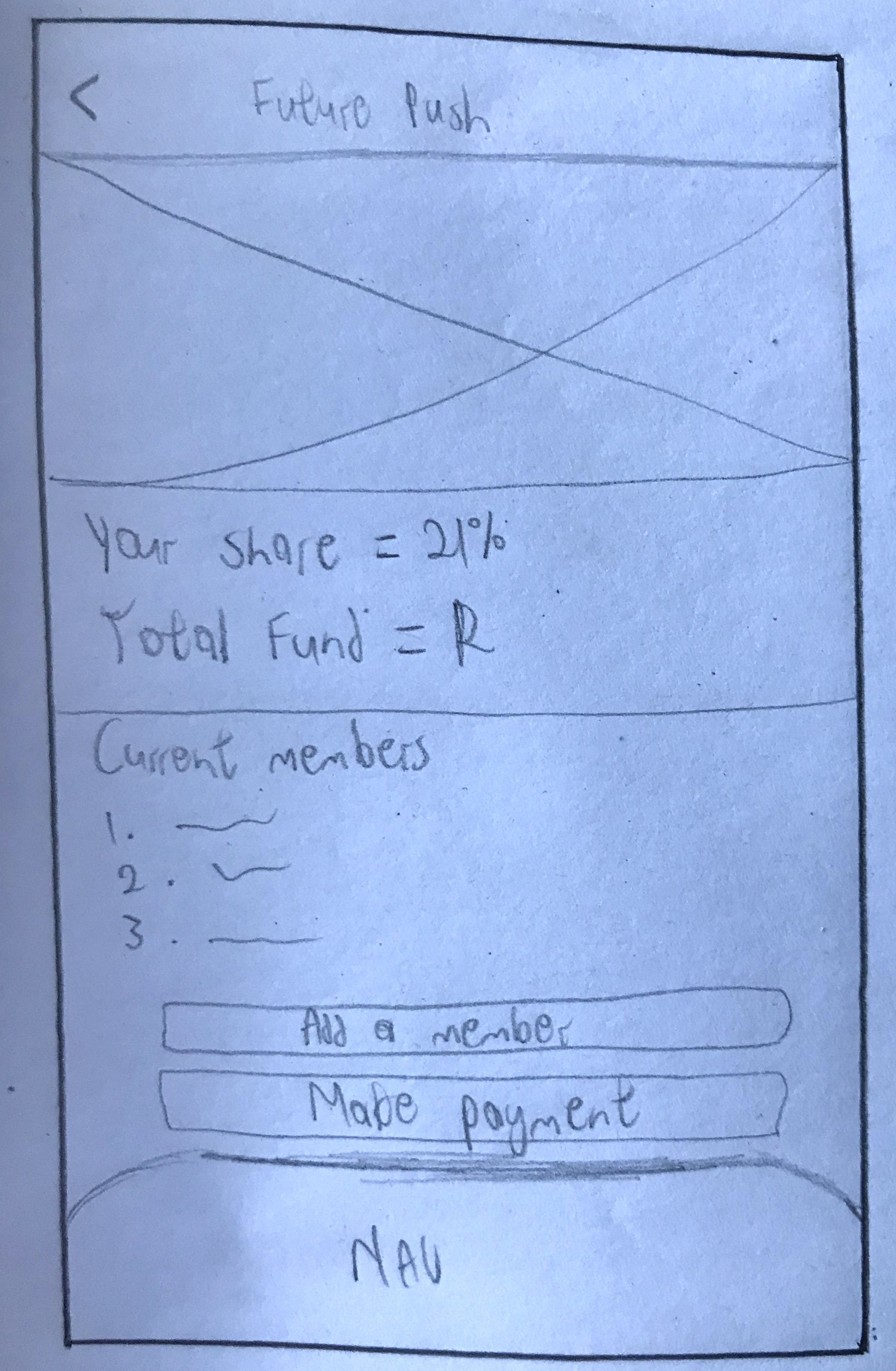
I surfaced the user's share percentage and the total fund amount to keep users motivated, alongside current members and quick-access buttons for adding a member and making a payment.
In the final design, I added the user's total contributed amount alongside the share percentage, as the percentage alone wasn't sufficient for motivation. I also included the fund release date to improve transparency. The option to invite a member was moved to sit beneath the member list for a more intuitive flow. Finally, I added an "Activity" section showing when other members make payments, increasing visibility and reinforcing motivation.
Final Designs
Home PAGE
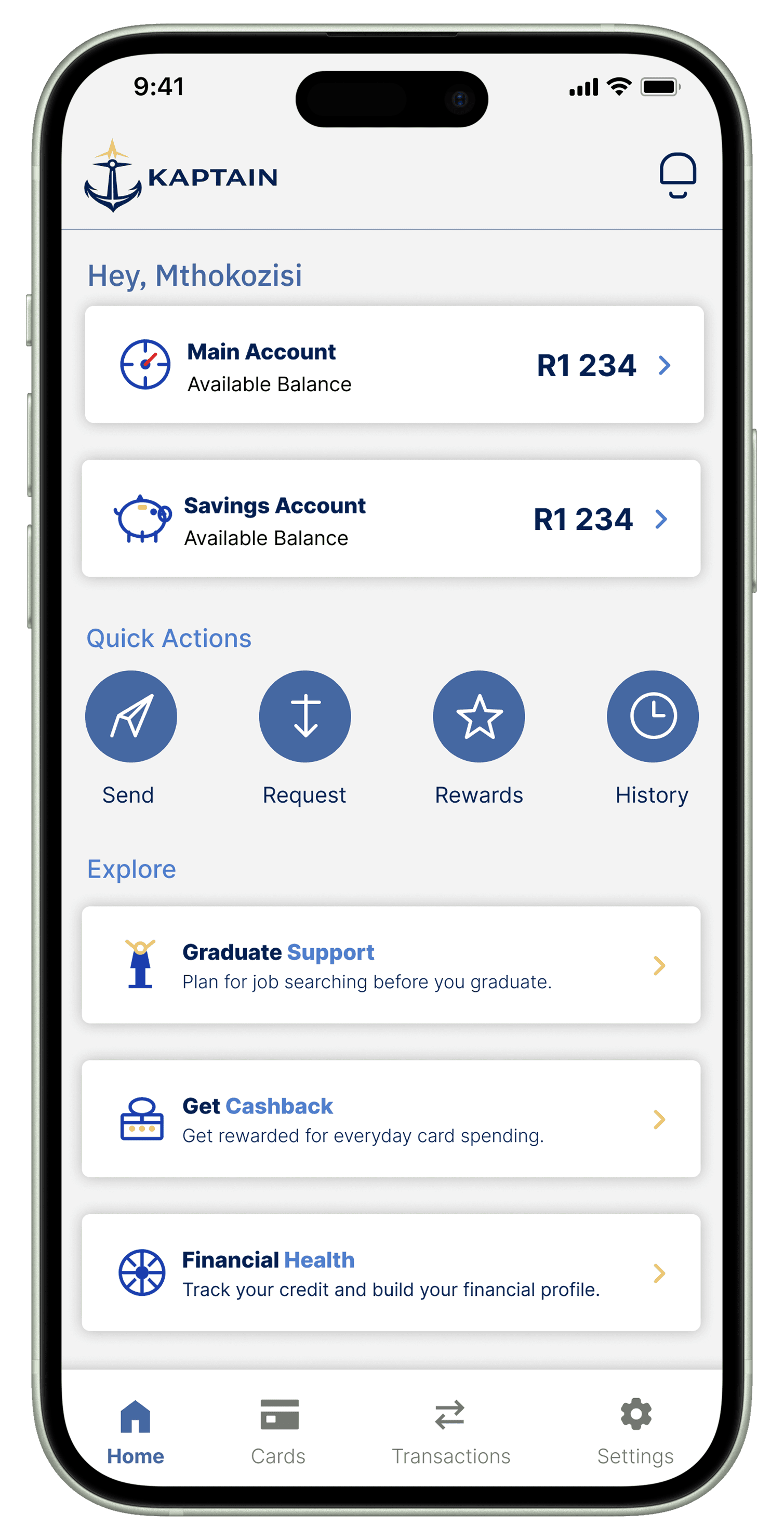
As intended, for the final design I created a dedicated Explore section where the feature sits contextually rather than floating beneath the balance.
I removed the prominent card, as it distracted from other banking features, and increased the width of the components so there was room for descriptions beneath each feature name, giving users a scannable hook to spark curiosity and encourage clicks.
Information Page
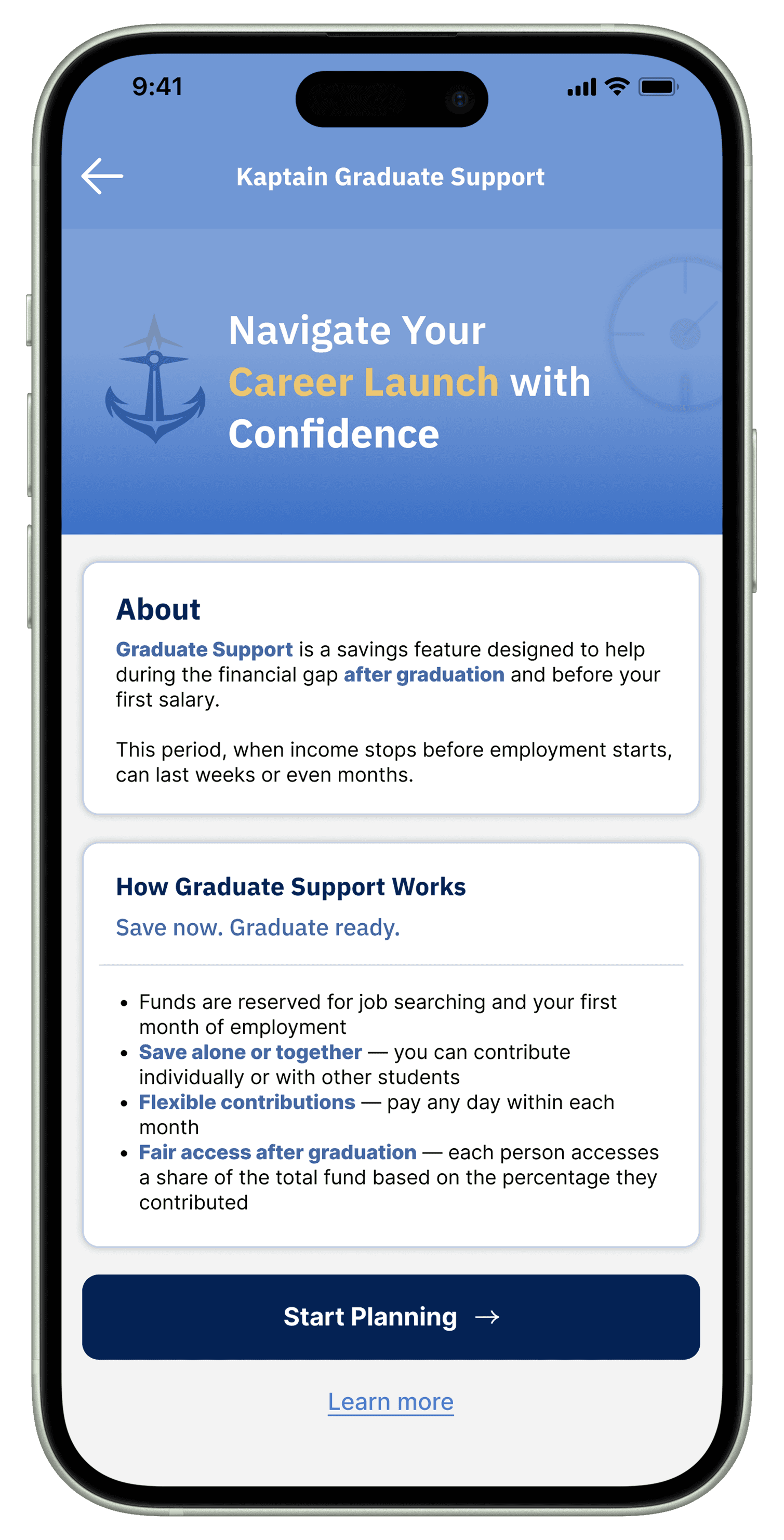
As intended, I included an "About" section to give users an overview of the feature, and a "How It Works" section to provide further details.
I added a "Learn more" link beneath the CTA for users who still needed clarification after reading through the content.
Personalisation Page
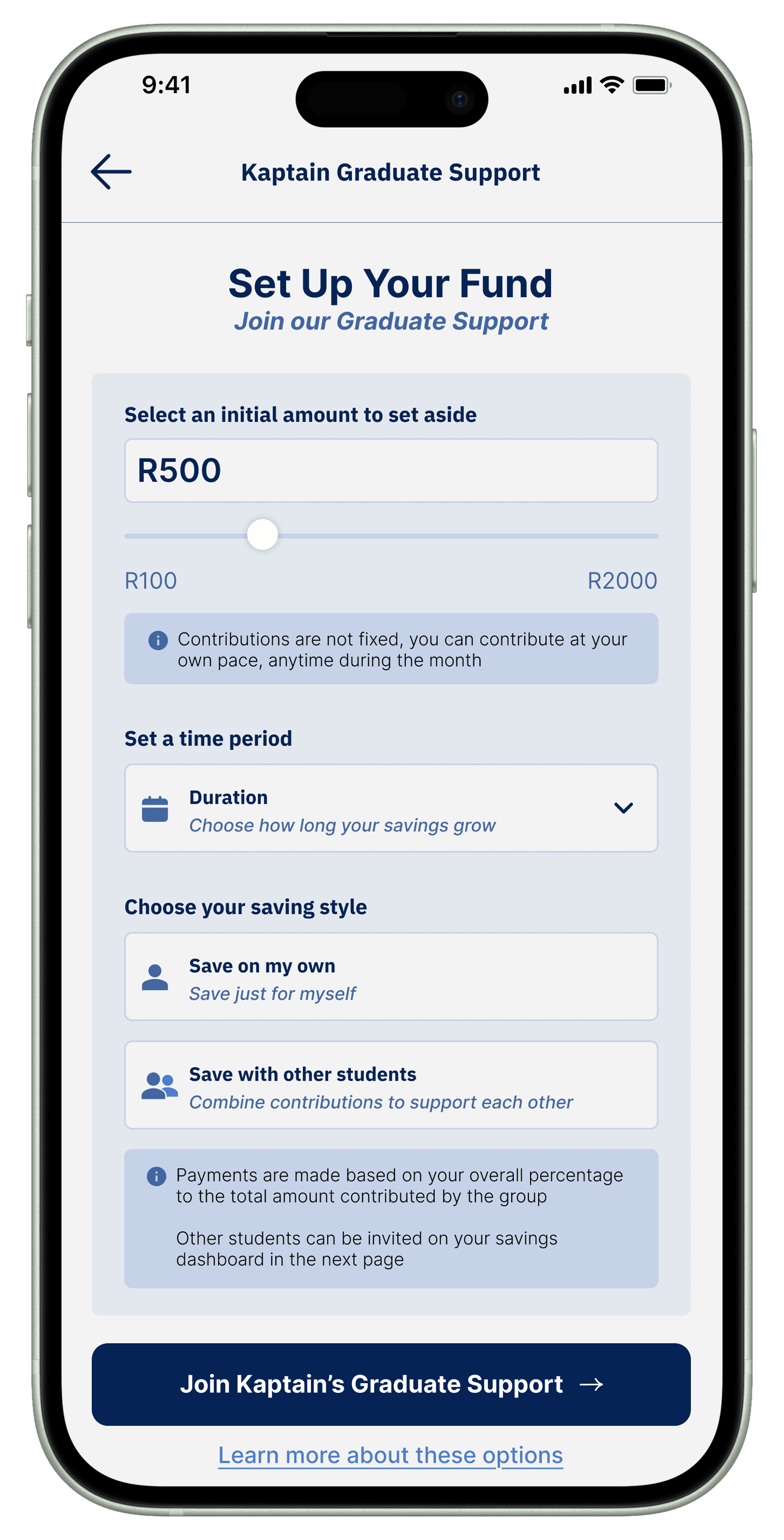
For this final design, I replaced the amount dropdown with a slider ranging from R100 to R2,000 in increments of R100, as a dropdown would have been too long.
I renamed the field to "Select an Initial Amount" to imply that the amount can be changed over time.
I replaced the "No. of Members" dropdown with two clickable options that include descriptions, along with helper text explaining how additional members can be added.
I added a "Learn More About These Options" link beneath the CTA for users who needed further guidance.
Dashboard Page
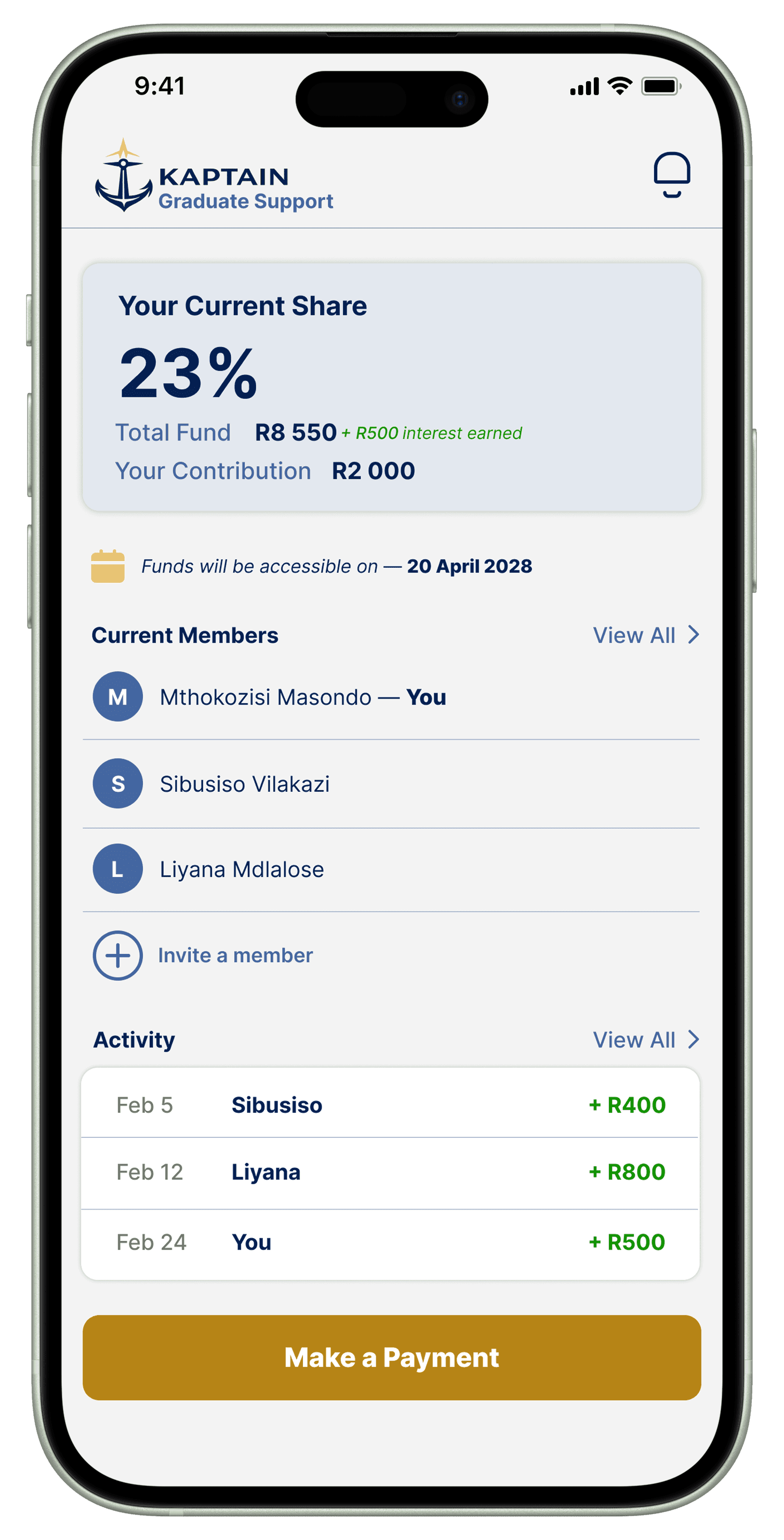
For the final design, I added the user's total contributed amount alongside the share percentage and also added the interest earned, as the percentage alone wasn't sufficient for motivation.
I also included the fund release date to improve transparency.
The option to invite a member was moved to sit beneath the member list for a more intuitive flow.
Finally, I added an "Activity" section showing when other members make payments, increasing visibility and reinforcing motivation.
I then moved on to the final design.
Takeaways
What I Learned
Designing without primary research requires careful reasoning. Every decision has to be defended on logical and empathetic grounds rather than validated data, which forces you to think carefully about assumptions.
What I'd Do Differently
The most significant gap in this project is the absence of real users. If I were to do this again, I would conduct even lightweight research, a handful of conversations with recent graduates before committing to the feature. There's a real possibility that the group savings model, is not what graduates actually want or trust.
Secondly, the collective savings model raises questions I didn't resolve. What happens when a member drops out of the group? What happens when someone can no longer afford to contribute? What happens when group members are in different years of study with different graduation dates? A future iteration would need to resolve these problems explicitly, with clear terms the user understands before they join Graduate Support.
I also I didn't define how the money gets paid out at graduation. Is it a lump sum or a monthly pay out? A future iteration would offer the choice upfront (and a way to change it later), with enough context for the user to make an informed decision.
Finally, a future iteration would have to have a way to confirm that the user is a current university student, and a way to confirm when they've graduated.
See more of my work

Home Page Redesign
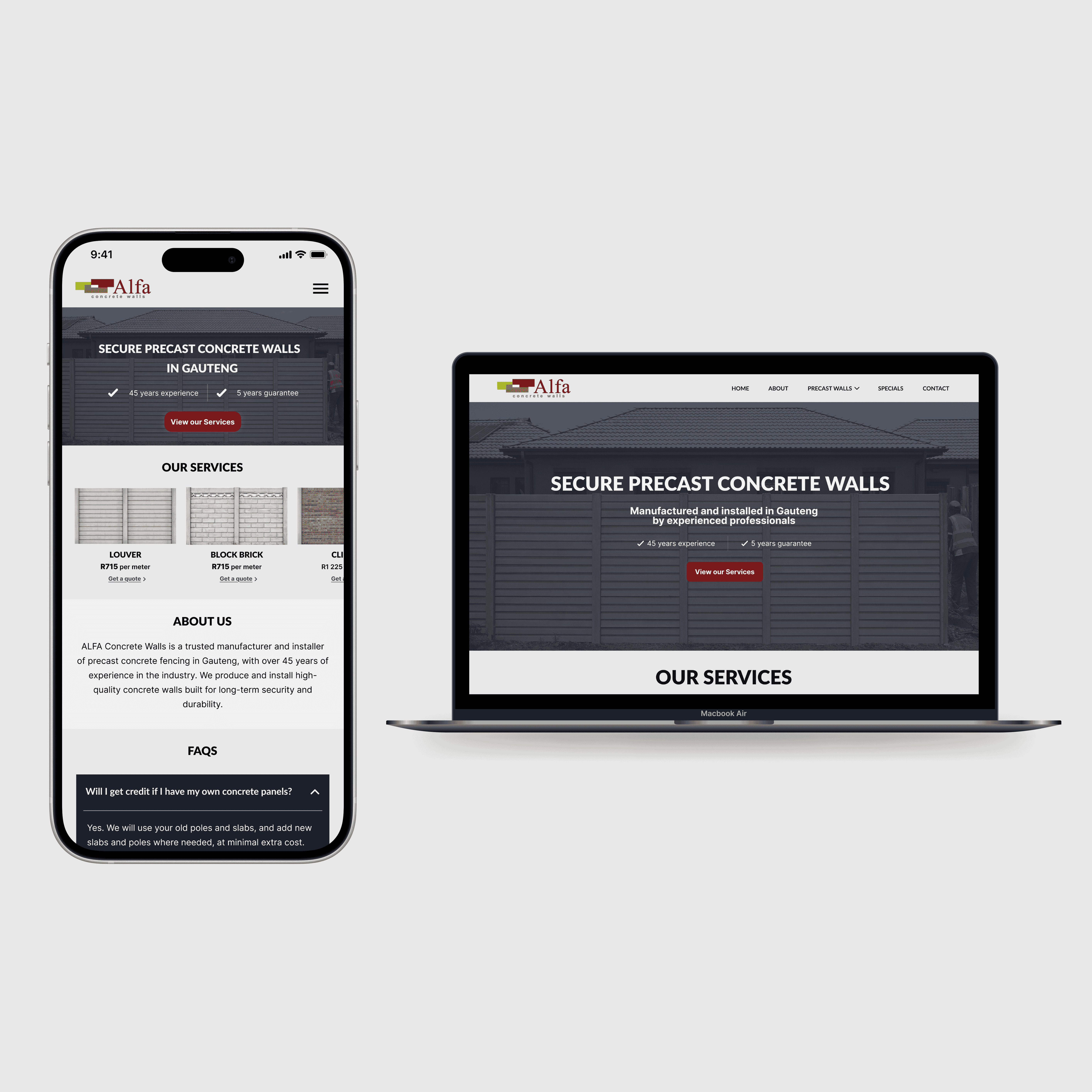
I redesigned Alfa Concrete Walls' home page for clarity, stronger product focus, and more intuitive user navigation.

