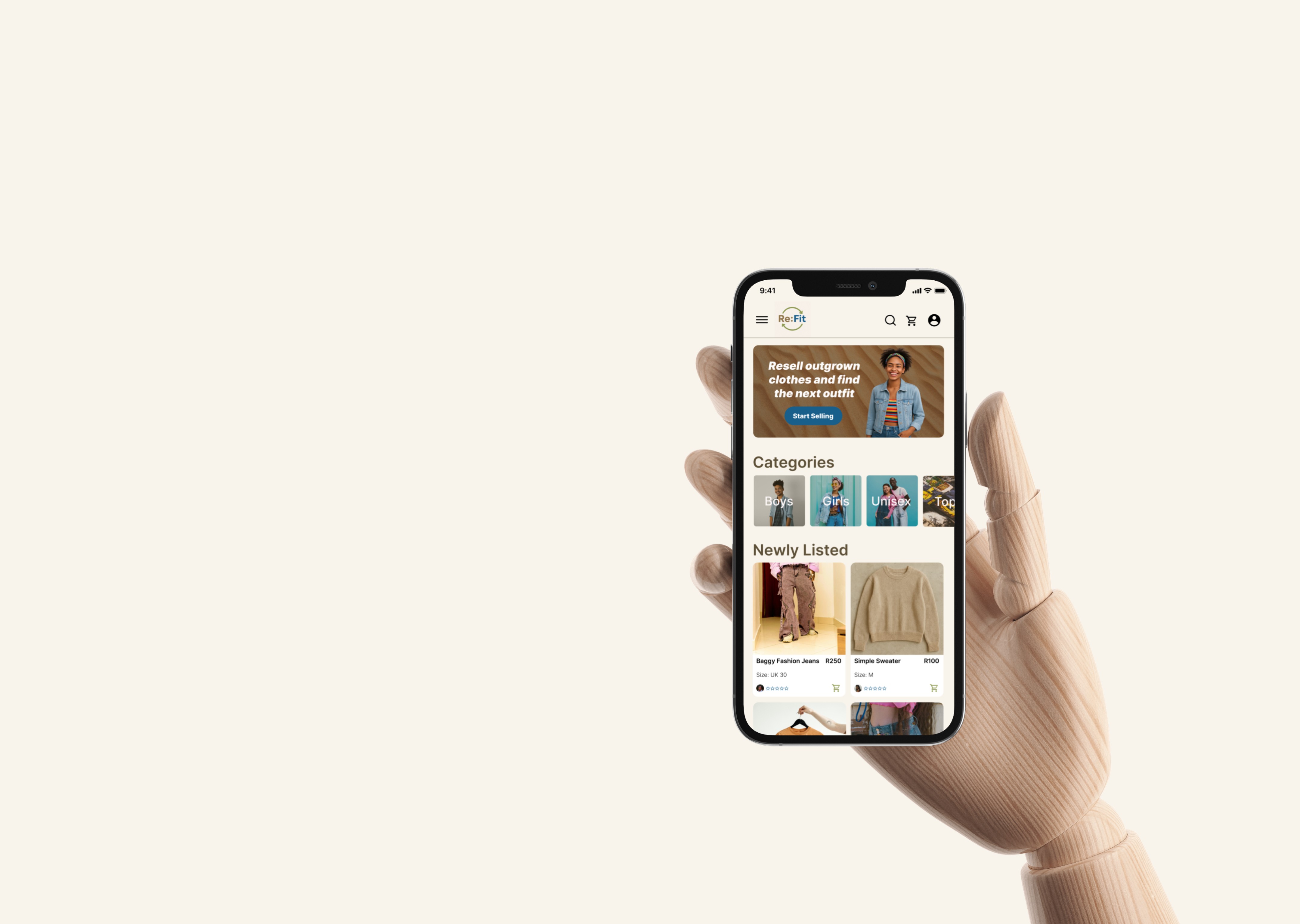
I analysed three South African resale platforms: Yaga, Wisi-Oi, and Love It Again to understand how they currently structure clothing categories, and where teenage clothing fits within them.
Teenage clothing is not presented as a distinct category on these platforms. Items appear under broader groupings such as “kids”, “youth”, or standard men’s and women’s sections.
This means there is no single, clearly defined place to browse specifically for teenage clothing. Finding relevant items requires searching across multiple categories rather than navigating to one dedicated section.
Even when teenage clothing is present, it appears in small amounts and is spread across these broader categories. Because it is both limited and difficult to locate, its presence is not obvious. In practice, this makes teenage clothing feel largely absent from these platforms, despite existing within them.
I then constructed a representative persona to keep in mind as I worked on the project.
Who They Are
Busi Nkosi is 38 years old and works full-time while managing household finances for a family of four. She budgets carefully, stretching every rand as far as possible. Her teenagers are in high school and growing quickly, what fits in January is often too small by June. Busi wants her children to look presentable but cannot afford to buy new clothes every few months.
What's Working Against Them
Teen clothing is expensive and short-lived. As her children grow, Busi faces constant pressure to purchase new items, but her tight budget limits her options. Existing resale platforms rarely cater to teenage clothing, focusing instead on adult items, leaving her with very few affordable alternatives.
What They Want
Busi needs a way to recover value from outgrown clothing and access affordable, quality second-hand items that suit growing teens. Ideally, this solution should be easy to use on mobile, fit into her routine, and reduce the stress and expense of keeping up with her children’s clothing needs.
Selling
Home Page
The entry point. The design challenge here is visibility, making the option to sell feel accessible and immediate, without requiring effort to find it.
Selling Page
This is where the user lists an item. The process needs to be quick and uncomplicated as selling is likely something done in between other responsibilities. The goal is to minimise effort while still capturing enough information to make the listing useful and trustworthy for buyers.
Home Page
The starting point for browsing. Here, the user is presented with clear entry points into categories and new listings, allowing them to quickly move toward relevant items without unnecessary searching.
Category Page
This page appears once a user selects a specific category. It acts as a focused browsing space, showing only relevant items within that category. The challenge here is helping users quickly scan and compare listings, despite differences in quality, sizing, and presentation.
Product Page
The decision point. The user evaluates a specific item: its condition, size, and price. This page needs to build enough trust for the user to feel confident purchasing second-hand clothing, despite not seeing it in person.
After validating task flows, I created wireframes to explore how browsing, evaluation, and listing were structured to reduce uncertainty and increase trust in second-hand clothing exchange.
Selling
Buying
Selling Page
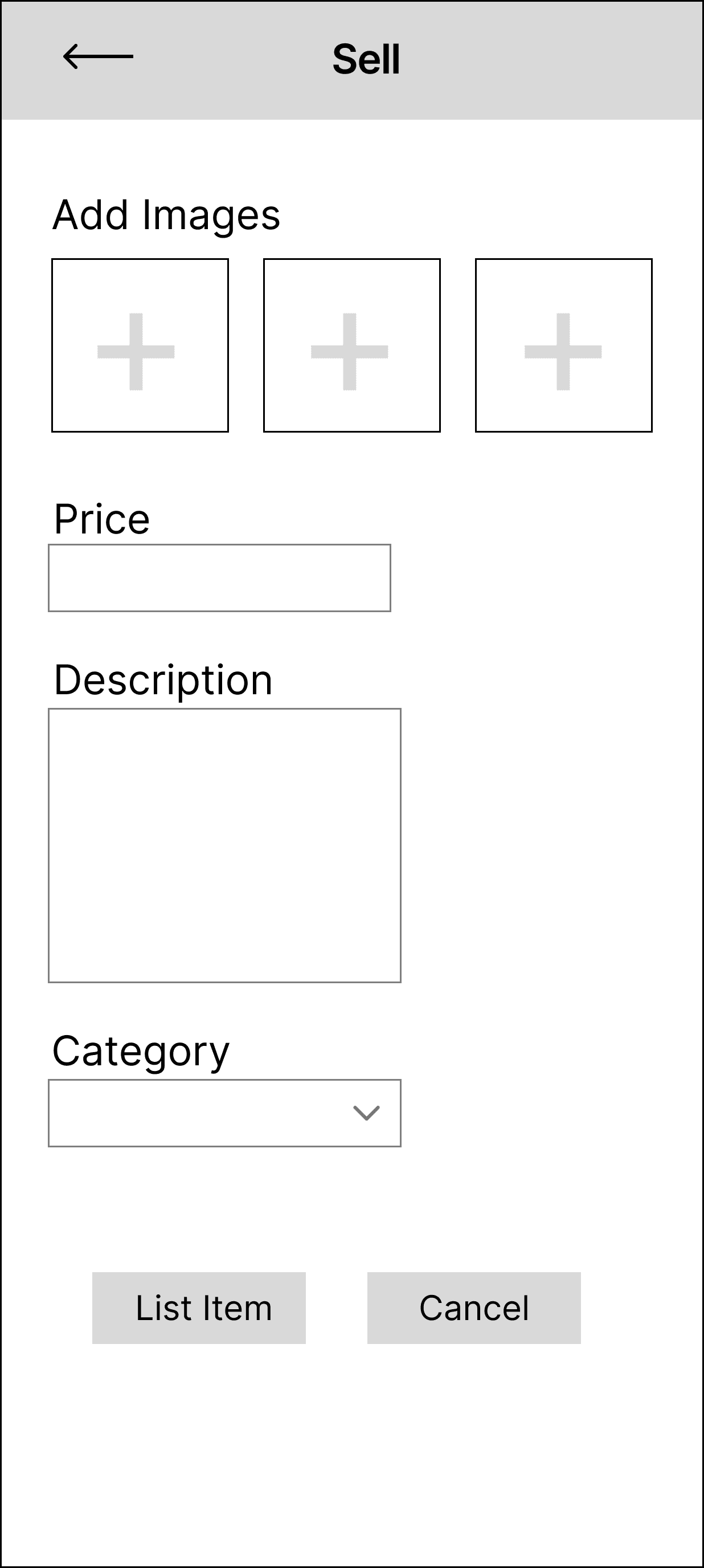
I designed this page to prioritise capturing the key details of a listed item, the images, price, description, and category.
In the final design, I introduced structured fields to reduce reliance on seller-written descriptions, which can sometimes lack sufficient or relevant information.
Home Page
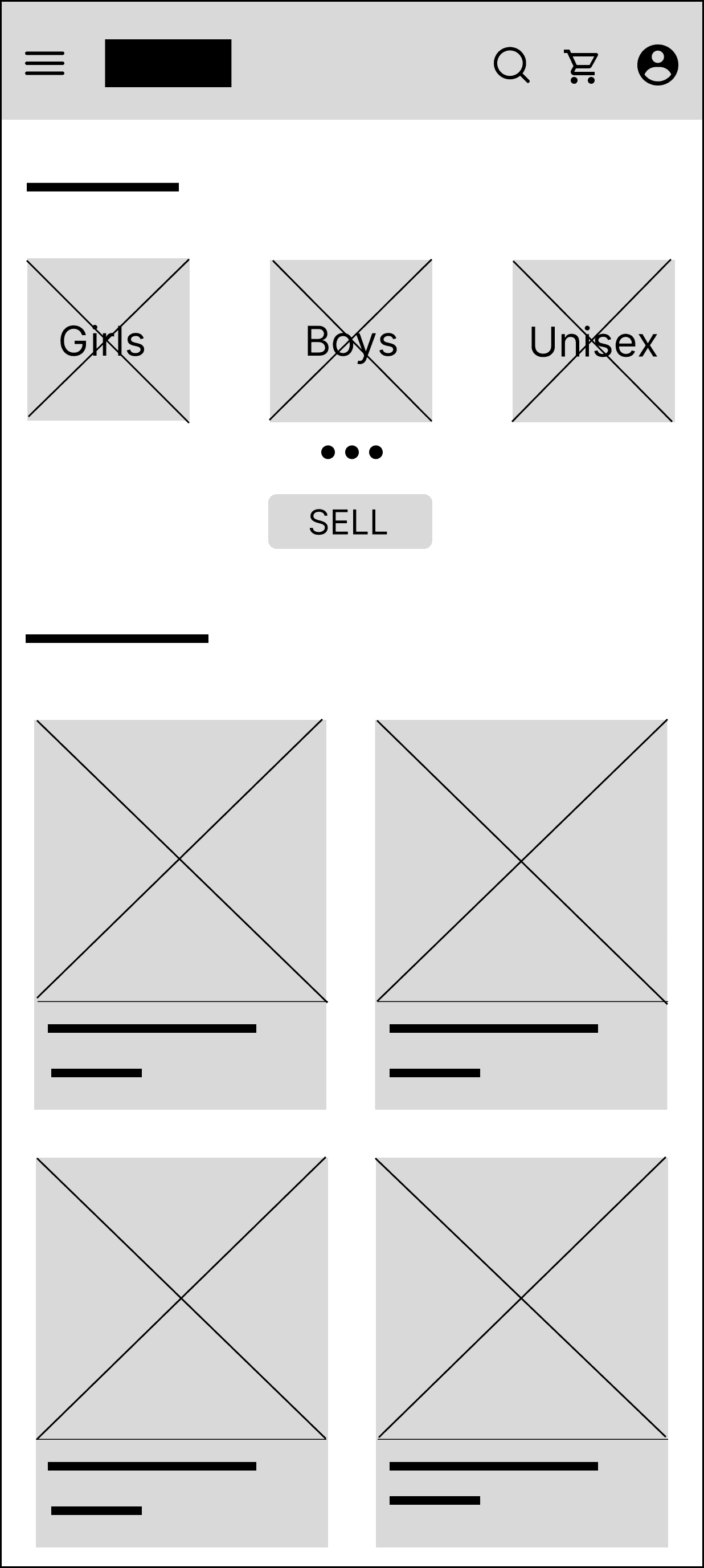
I designed this page to prioritise both buying and selling, placing categories and the sell button prominently at the top, with newly listed items displayed underneath.
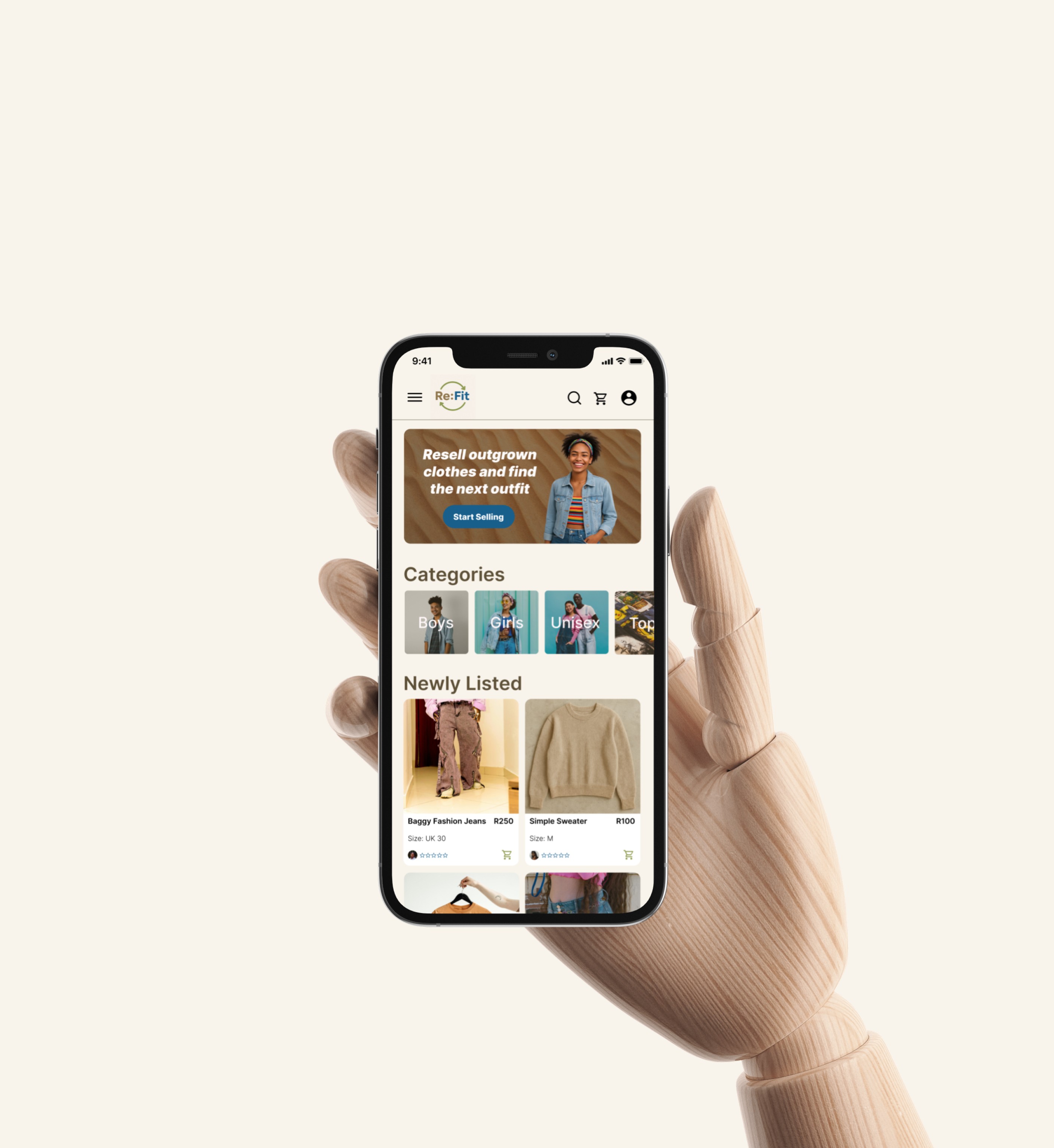
In the final design (shown below), I added a banner image featuring a prominent sell button and a smiling teenager to make the site feel more welcoming and personal.
Category Page
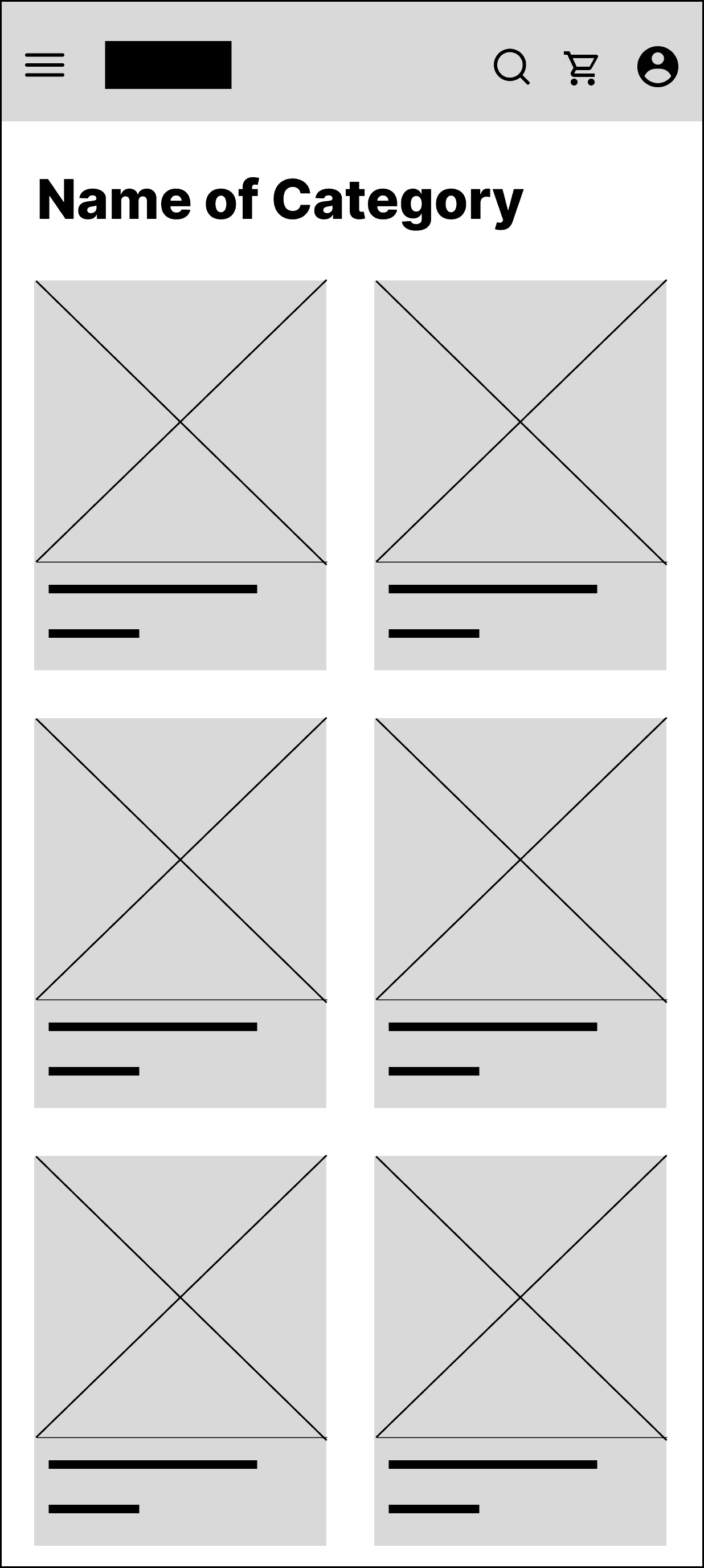
I designed this page to prioritise displaying as many items within a category as possible.
In the final design (shown below), I retained the category slider from the home page, allowing users to quickly switch categories without having to navigate back each time.
Product Page
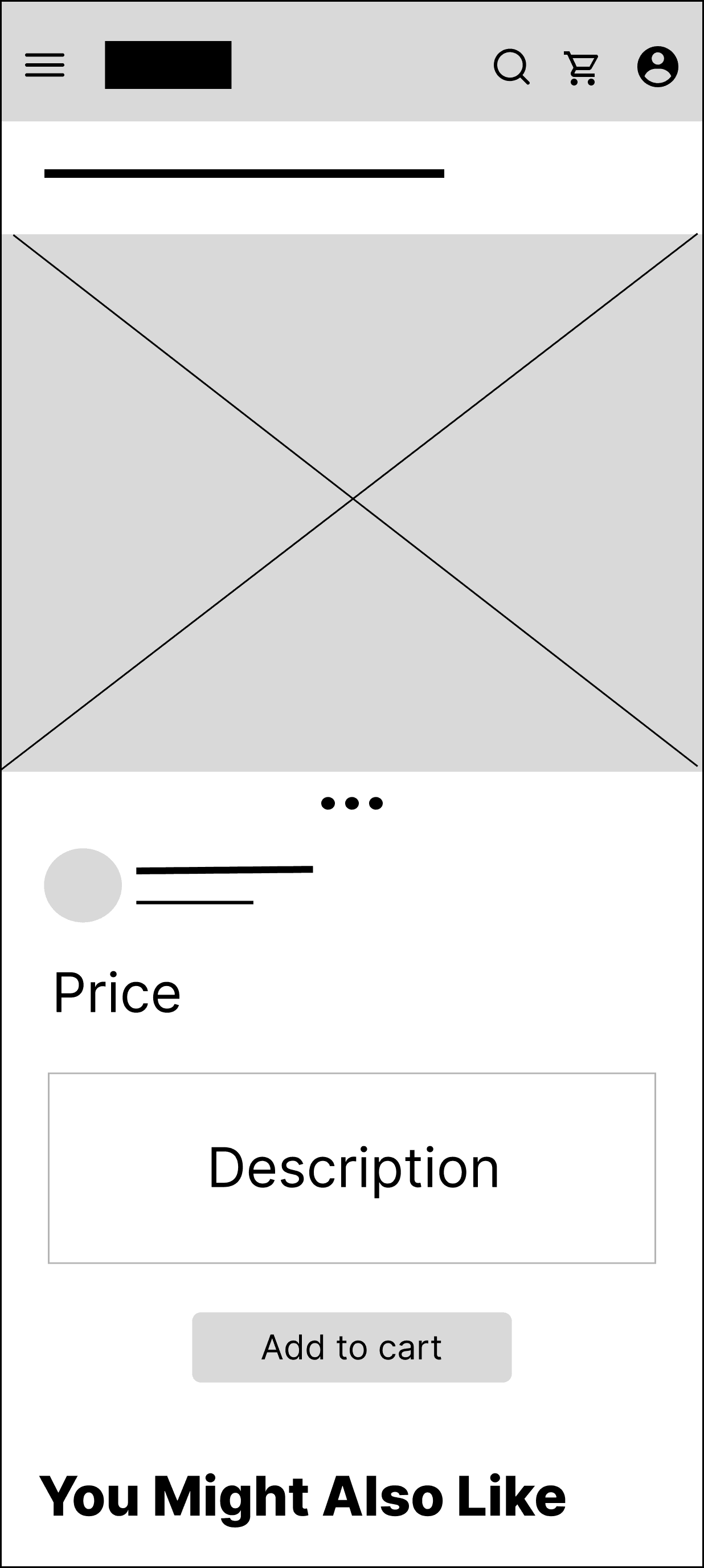
I designed this page to prioritise a large view of the item, a seller profile to build trust and humanise the transaction, an item description, and a "You Might Also Like" section to surface similar items.
In the final design (shown below), rather than relying solely on seller-written descriptions, I introduced structured fields on the selling page, including size, condition, and price, which are then displayed here. I also added delivery and refund information to build buyer trust. Finally, I included the ratings of the seller, the amount of sales they've made and the last time they were active on the site to further build trust. For users who still have questions about the listed item, I included a button to message the seller.
Final Designs
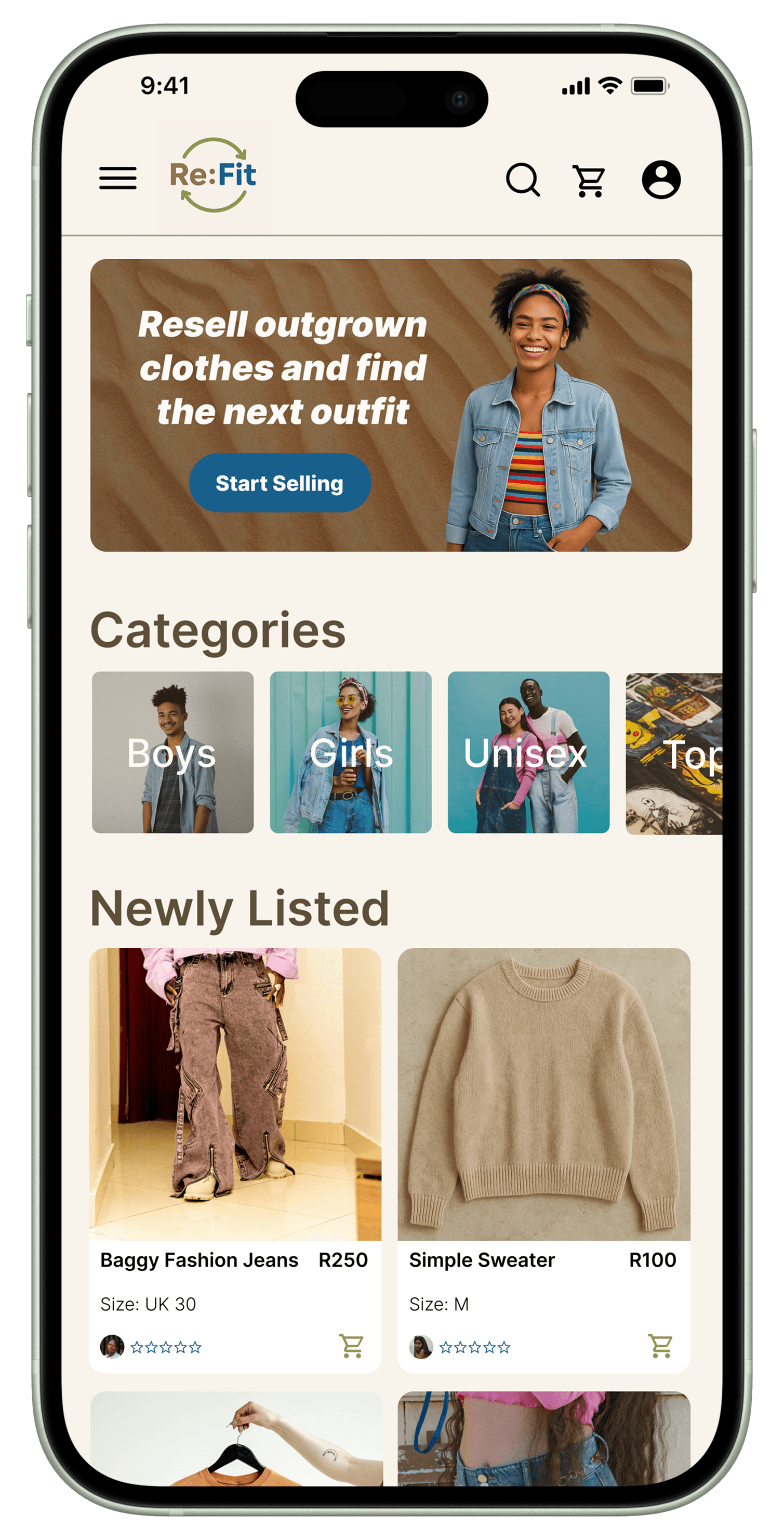
As intended, I introduced a banner image with a prominent sell button and a friendly image of a smiling teenager, creating a more welcoming and personal first impression. The prominence of the banner with the CTA for selling, balances the needs of both buyers and sellers through making both buying and selling visible, while softening the overall feel of the page.
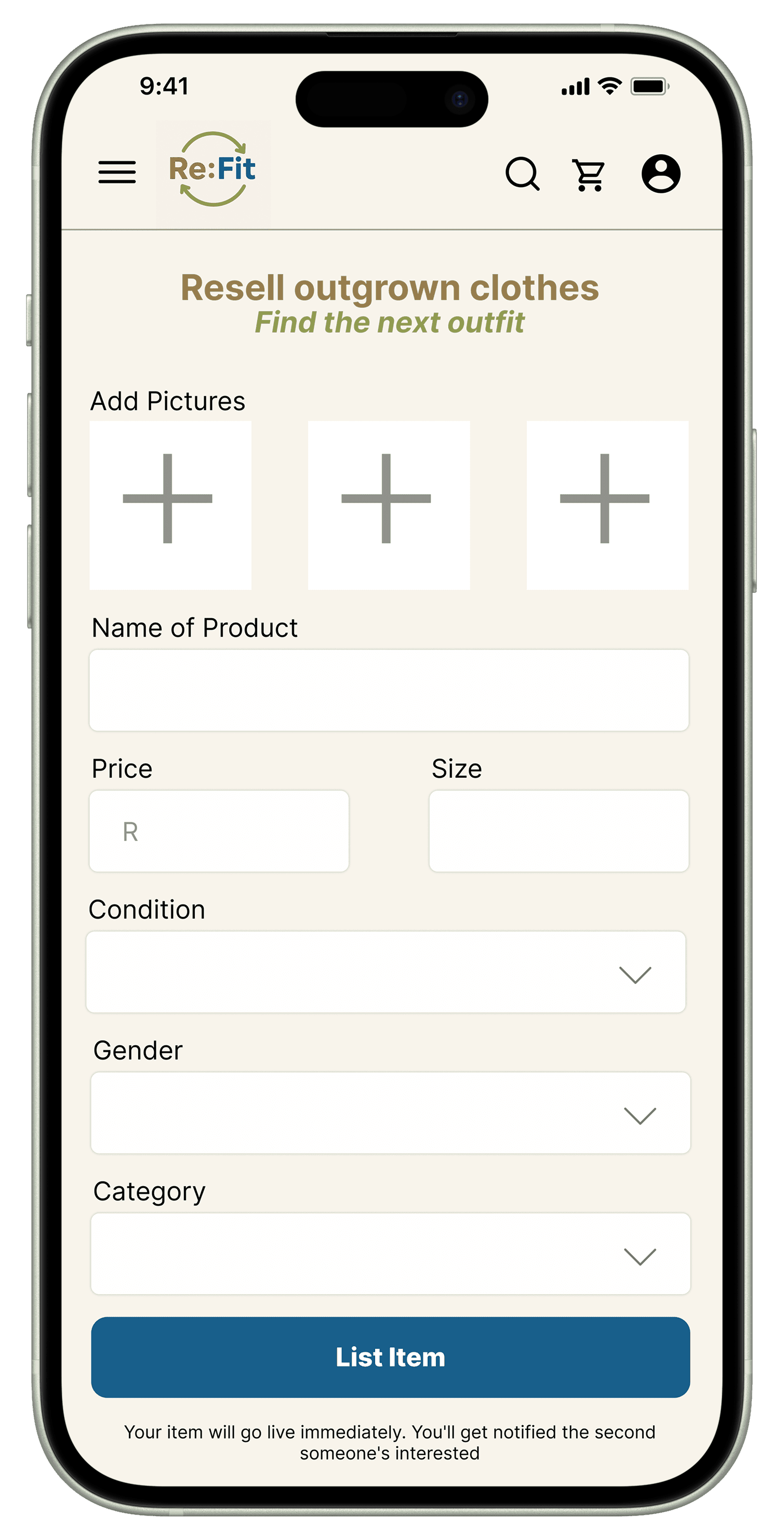
As intended, in the final design, I introduced structured input fields to guide sellers in providing the most relevant information, reducing the risk of incomplete or vague descriptions. This results in a more reliable and consistent experience across all listings.
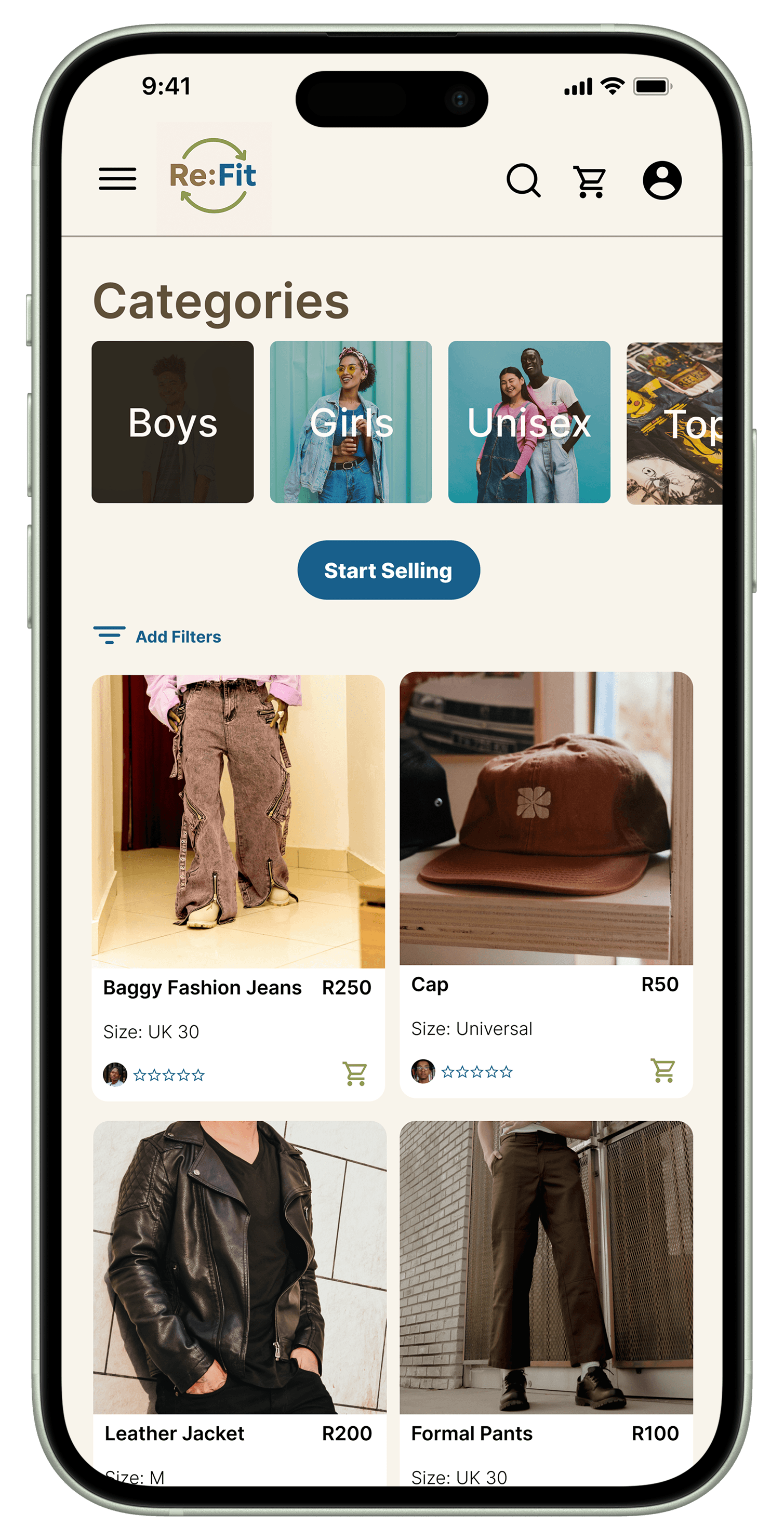
As planned, I retained the category slider from the home page, allowing users to switch categories without having to navigate back. This keeps the browsing experience fluid while maximising the number of visible items on screen.
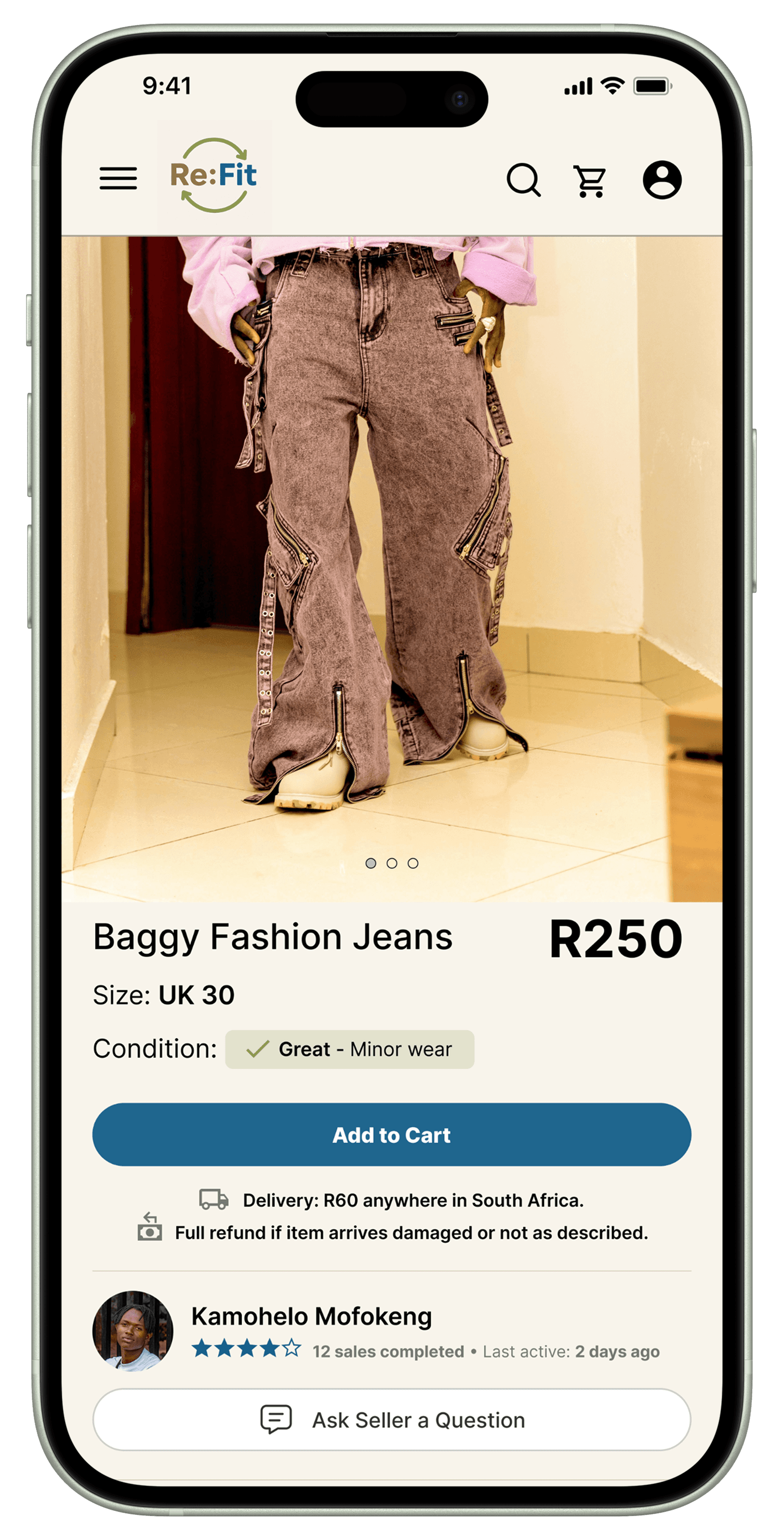
As outlined, I replaced open-ended seller descriptions with structured fields displaying key details such as size, condition, and price, ensuring listings are consistently informative. Delivery and refund information is also surfaced along with the ratings of a seller, the amount of sales they've completed, and the last time they were active on the site, to strengthen buyer trust. I also included a button for messaging the seller so that users that have questions about the listed item can ask.
Selling
Takeaways
What I Learned
Documentation turned out to be more important than I initially anticipated. I learned fairly quickly that capturing my reasoning as I made decisions, rather than trying to piece it together later, made a significant difference. By the end of the project, there were moments where I genuinely couldn't remember why I had made certain choices, which was a clear reminder that good documentation isn't just helpful, it's necessary.
What I'd Do Differently
See more of my work
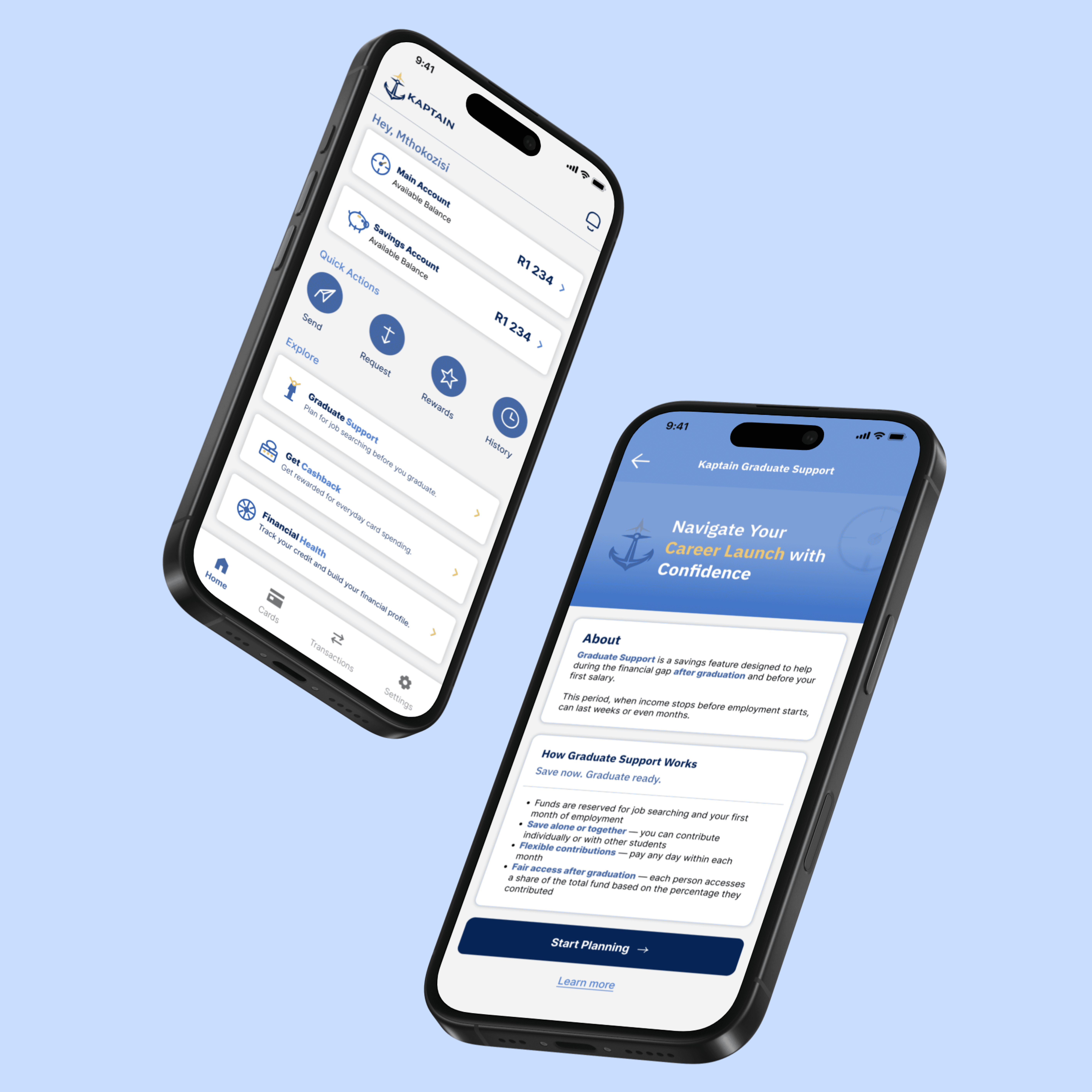
Home Page Redesign
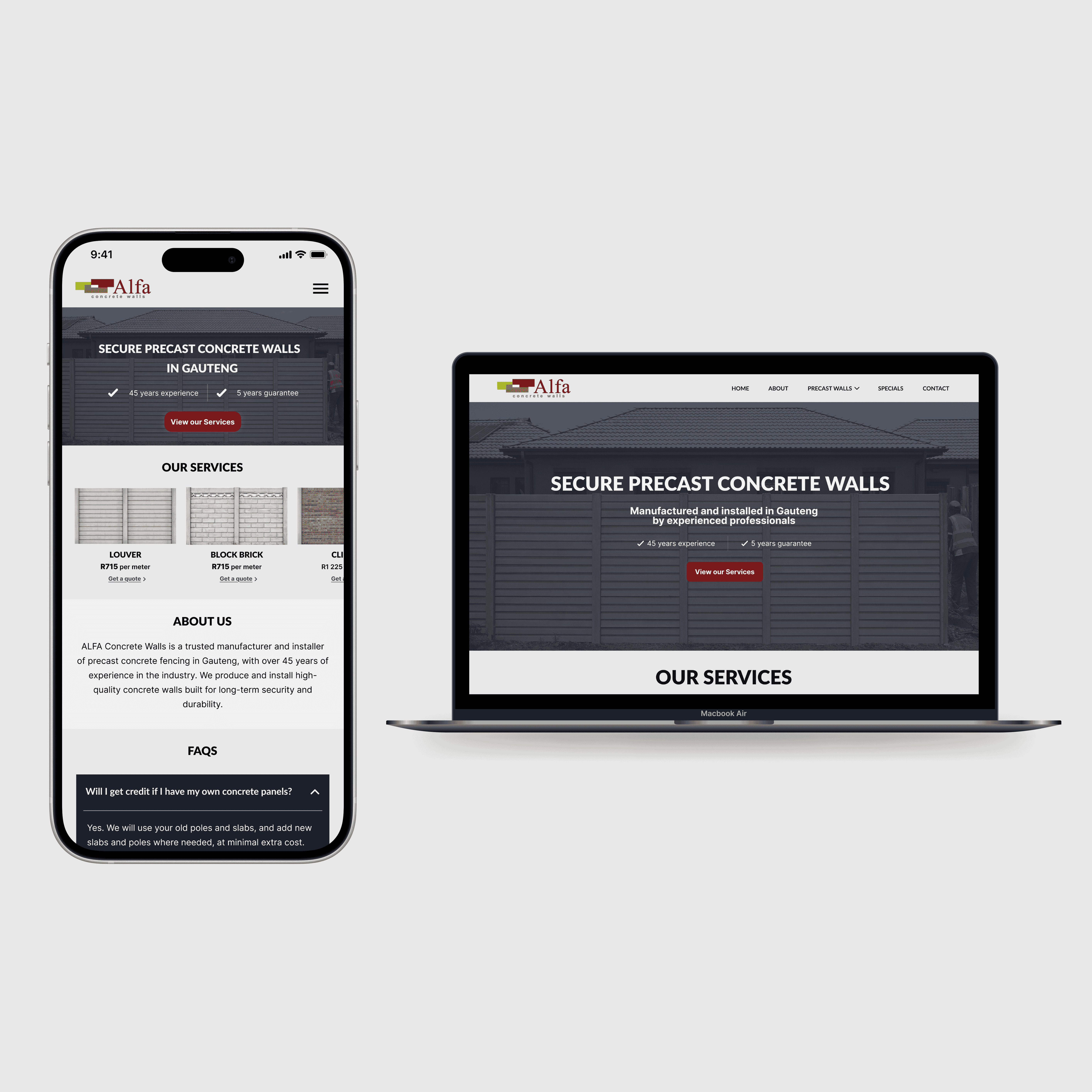
I redesigned Alfa Concrete Walls' home page for clarity, stronger product focus, and more intuitive user navigation.

